Choosing cat litter may seem simple, but not all cat litter products offer the same level of performance, safety, or comfort. A litter may look inexpensive and attractive on the shelf, yet create problems such as excessive dust, weak clumping, poor odor control, tracking, or unpleasant texture.
For cat owners, the goal should not simply be to find the cheapest cat litter. A better approach is to evaluate the litter based on its raw materials, particle size, dust level, absorption, clumping strength, odor control, and your cat's preferences.
For retailers, distributors, and private-label pet brands, these factors are even more important. Poor-quality litter can lead to customer complaints, low repeat-purchase rates, and damage to a brand's reputation.
So, how can you distinguish the worst cat litter from a reliable product? This guide explains the key signs to check before buying or developing a cat litter product.
What Makes Cat Litter Low Quality?
There is no single characteristic that defines the "worst cat litter." A product can have good absorption but excessive tracking, or excellent clumping but an unpleasant fragrance.
A practical evaluation should consider several factors together.
| Quality Factor | Better Cat Litter | Low-Quality Cat Litter |
|---|---|---|
| Dust | Low dust during pouring and scooping | Large amounts of visible dust |
| Absorption | Quickly absorbs liquid | Liquid remains on the surface |
| Clumping | Firm and easy to scoop | Breaks apart easily |
| Odor control | Controls odors effectively | Only masks odors with fragrance |
| Tracking | Limited litter around the box | Granules spread throughout the home |
| Texture | Comfortable for cats' paws | Uncomfortable or overly coarse |
| Consistency | Uniform granules and performance | Uneven size, excessive powder |
| Ingredients | Clearly identified materials | Unclear or inconsistent composition |
| Multi-cat performance | Maintains performance under frequent use | Quickly becomes dusty or saturated |
| Packaging | Clear product information | Limited or unclear information |
The important point is that quality should be evaluated through actual performance rather than price alone.

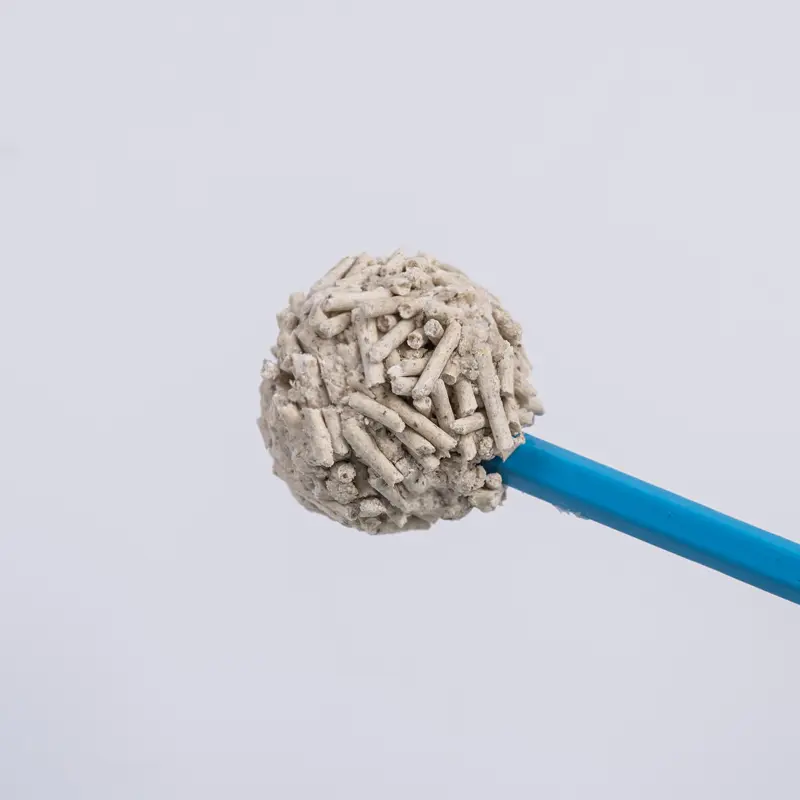
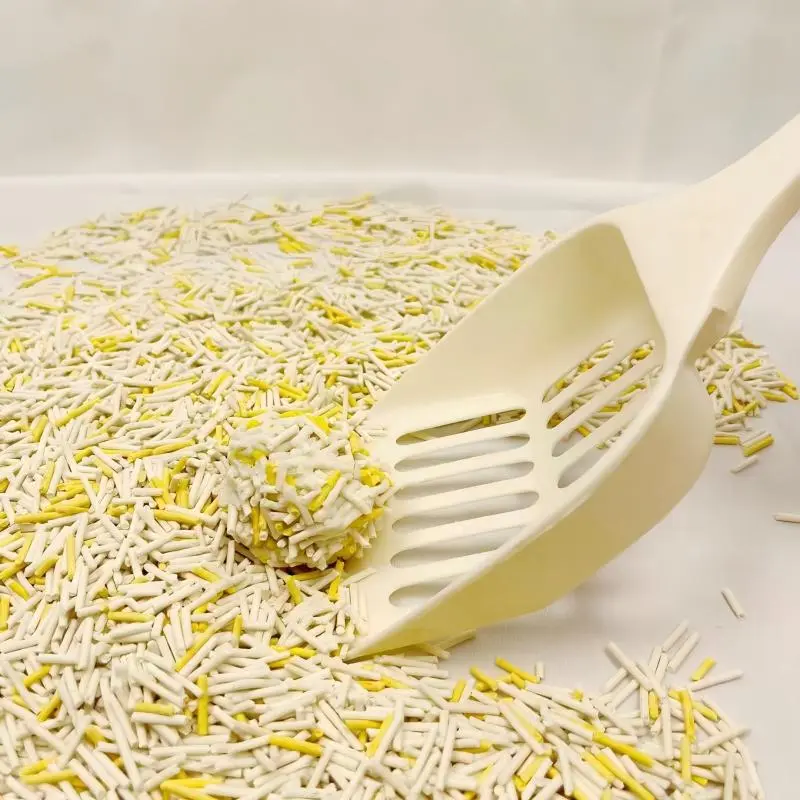
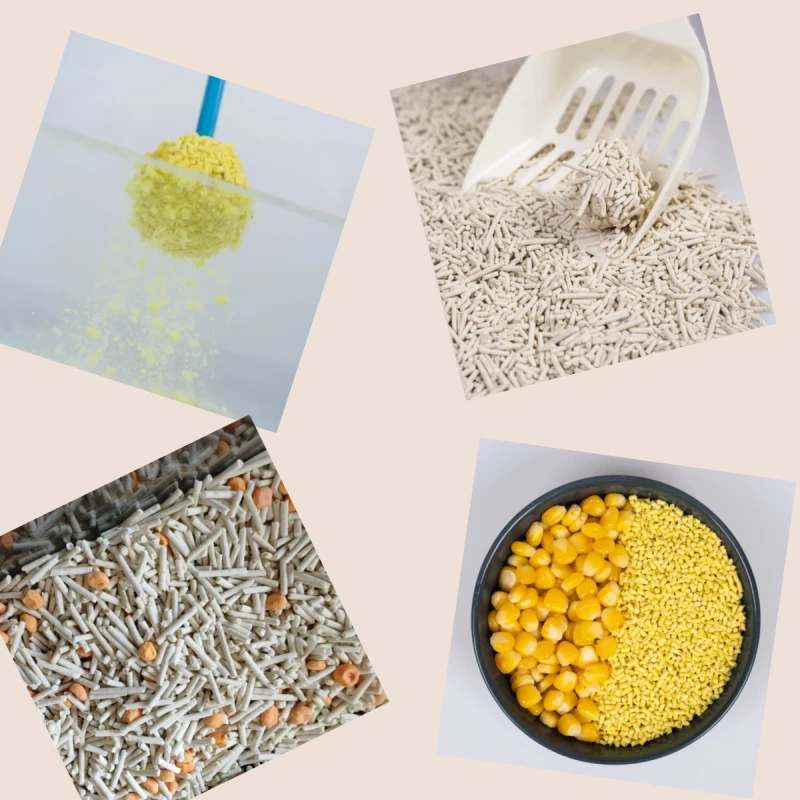
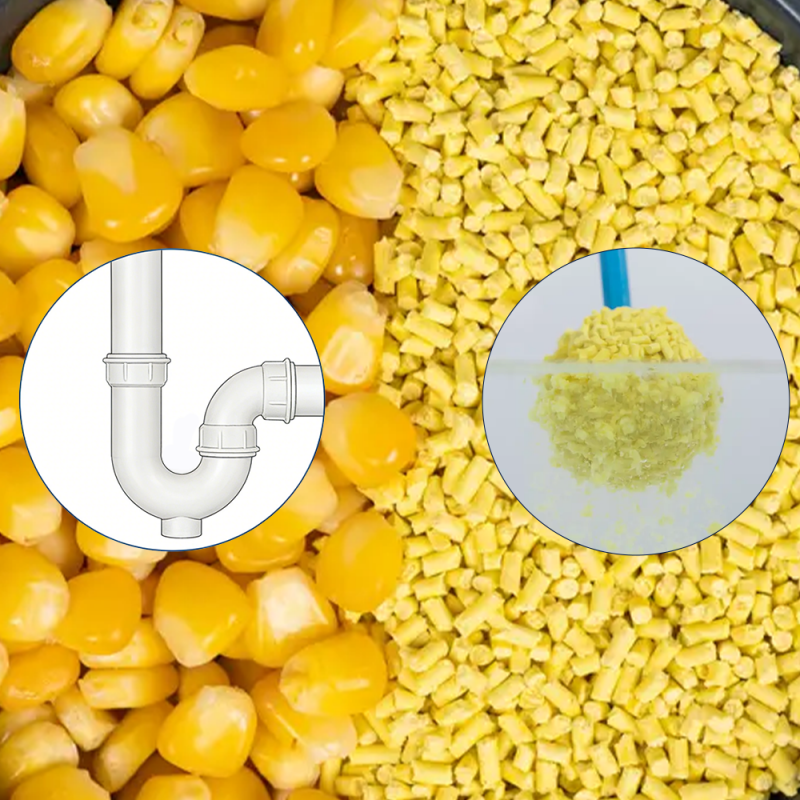
From this picture we can see the tight clumps played a very improtant role when you use it. It can help for you to scoop them out of litter box and eliminate the odors
1. Excessive Dust Is a Major Warning Sign
One of the easiest problems to notice is excessive dust.
When cat litter is poured into a litter box, some fine particles are normal. However, a product that creates a visible cloud of dust every time it is poured or scooped deserves closer attention.
Fine particles can also spread around the home and settle on floors, furniture, and other surfaces. Cats may come into contact with these particles when they dig, cover their waste, or groom their paws.
Dust can be influenced by several factors, including raw materials, production processes, drying conditions, crushing methods, and particle size distribution.
For this reason, simply choosing a particular type of litter does not automatically guarantee low dust. Bentonite, tofu, corn, silica, and other litter categories can all have different dust levels depending on how they are formulated and manufactured.
How to Test Cat Litter for Dust
You can perform a simple practical test:
Pour a small amount of litter into an empty box.
Observe whether a visible dust cloud appears.
Scoop the litter several times.
Check the surrounding area for fine powder.
Examine whether the granules remain intact after repeated handling.
For commercial buyers, laboratory and factory quality-control testing can provide more reliable results than visual inspection alone.
2. Poor Clumping Makes Scooping Difficult
For clumping cat litter, clumping performance is one of the most important quality indicators.
A good clump should form quickly after absorbing urine and remain strong during scooping. If the clump breaks apart easily, wet litter can remain in the box and mix with clean litter.
This creates several problems:
More litter may need to be discarded.
The litter box can become difficult to clean.
Odors may become more noticeable.
The overall consumption of litter can increase.
Customers may feel that the product does not provide good value.
Clumping performance is affected by raw materials, particle size, moisture content, additives, and formulation.
For plant-based cat litter, the source and processing of materials are particularly important because different plant fibers and starch-based ingredients can behave differently when exposed to moisture.
3. Weak Odor Control Is Another Sign of Poor Performance
Odor control is one of the first things cat owners notice.
A litter box naturally produces unpleasant odors, especially when urine and feces remain in the box. A good cat litter should help manage these odors rather than simply cover them with a strong fragrance.
There is an important difference between odor masking and odor control.
A heavily scented litter may make the room smell strongly of perfume while the underlying odor remains. Some cats may also dislike strong fragrances.
When evaluating odor control, consider:
How quickly the litter absorbs urine
Whether urine remains exposed
How well clumps stay intact
Whether the material naturally helps control odors
Whether fragrance is used and at what level
How the product performs after repeated use
For plant-based products, raw material quality and formulation can significantly influence odor-control performance.
4. Excessive Tracking Creates a Mess
Tracking occurs when litter granules stick to a cat's paws or fur and are carried outside the litter box.
Some tracking is unavoidable because cats naturally walk, jump, dig, and groom after using the litter box. However, extremely small, lightweight, or easily fragmented granules can make tracking worse.
There is a common trade-off between particle size and performance.
Smaller particles can provide a larger surface area for absorption and may create a soft texture. However, they can also be easier for cats to carry out of the litter box.
Larger particles may reduce tracking but can feel different under a cat's paws.
| Particle Characteristic | Potential Advantage | Potential Disadvantage |
|---|---|---|
| Very fine granules | Soft texture, high surface area | More dust and tracking |
| Medium granules | Balanced performance | Requires good formulation |
| Large granules | Less tracking in some cases | May feel less comfortable to some cats |
| Irregular particles | Can provide varied texture | May create inconsistent performance |
The best choice is usually a balanced particle size rather than simply choosing the smallest or largest granules.
5. Poor-Quality Litter May Break Down Too Easily
A litter product can look good when it is first opened but perform poorly after several days of use.
Weak granules may break apart when cats dig, when owners scoop the box, or when wet clumps are removed.
This is particularly problematic because broken granules can turn into fine particles and increase dust.
A simple durability check is to handle a small amount of litter and observe whether the pellets remain intact. For manufacturers, durability should also be evaluated during production, packaging, transportation, and actual use.
Good cat litter should maintain reasonably consistent particle integrity throughout its normal service life.
6. Strong Fragrance Does Not Always Mean Better Odor Control
Some cat owners prefer scented cat litter, while others prefer unscented products.
The key issue is not whether fragrance is automatically good or bad. The more important question is whether the fragrance is being used to complement genuine odor-control performance or simply to cover unpleasant smells.
Cats can also have individual preferences regarding scent. A product that smells pleasant to a person may not be equally appealing to a cat.
If you are introducing a new litter, monitor your cat's behavior. Sudden refusal to use the litter box, excessive digging without elimination, or attempts to avoid the box can indicate that something about the litter is not suitable.
For manufacturers and brands, offering both scented and unscented options can help serve different consumer preferences.
7. An Uncomfortable Texture Can Cause Litter Box Problems
Cats are sensitive to the texture of the material under their paws.
A cat may prefer fine, soft granules, while another may tolerate a coarser material. There is no universal particle texture that every cat will prefer.
However, extremely hard, sharp, dusty, or unusual particles may be less comfortable for some cats.
When developing or selecting a litter, consider:
Particle shape
Particle size
Surface smoothness
Dust level
Moisture absorption
Overall consistency
A good product should provide a balance between performance and comfort.
8. Low-Quality Cat Litter May Perform Poorly in Multi-Cat Homes
A litter that performs adequately for one cat may not perform equally well in a multi-cat household.
More cats mean:
More frequent urination
More frequent feces
More digging
More scooping
Higher daily litter consumption
This puts greater pressure on absorption, clumping, odor control, and durability.
A reliable multi-cat litter should maintain its performance even when the litter box is used frequently.
When comparing products, do not only test them immediately after opening. Consider how the litter performs after several days of repeated use.
For commercial brands, multi-cat performance can also be an important product-development and positioning opportunity.
9. Unclear Ingredients and Poor Product Information
Consumers increasingly want to know what they are buying.
A cat litter package should provide clear information about the primary material, product characteristics, usage instructions, and relevant safety or quality information.
Unclear descriptions can make it difficult for buyers to compare products.
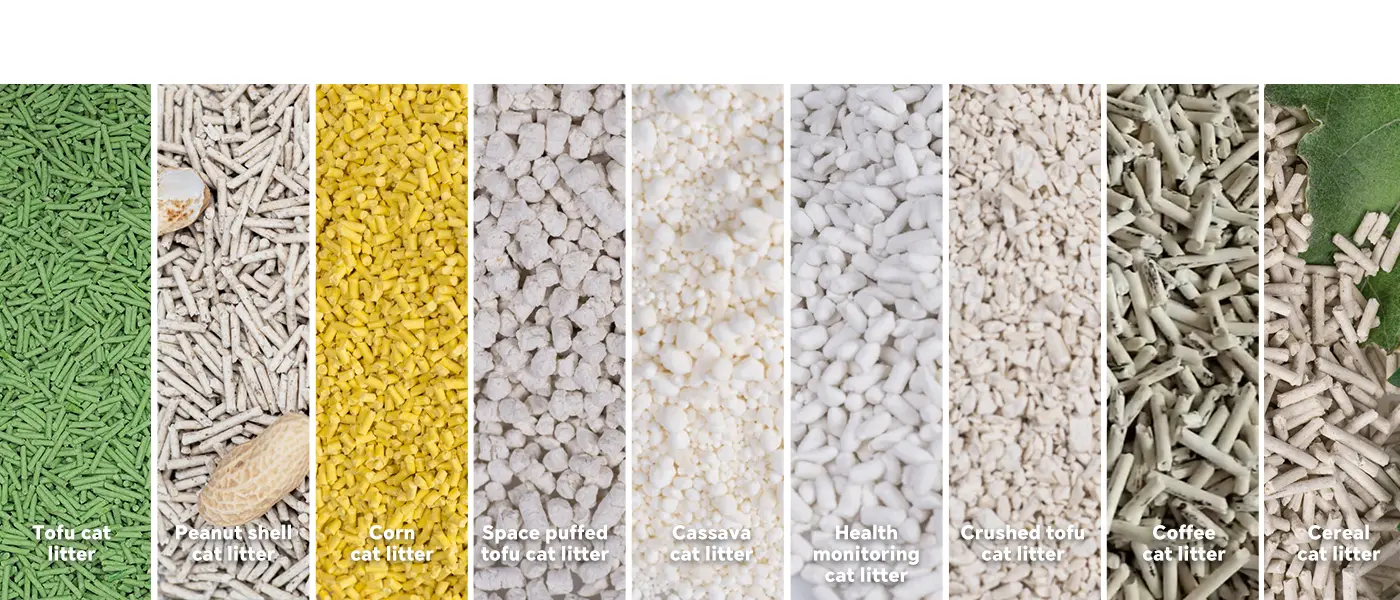
For example, instead of simply describing a product as "natural cat litter," brands can explain whether it is tofu-based, corn-based, cassava-based, cereal-based, mineral-based, or a blend of different materials.
Clear information also helps retailers communicate product benefits more accurately.
For private-label and wholesale customers, detailed product documentation can be particularly valuable because it supports product listings, packaging development, quality control, and market compliance.
10. Non-Biodegradable Does Not Automatically Mean Bad—but Sustainability Matters
Environmental impact has become an important consideration for many cat owners.
Traditional mineral-based cat litter can perform well in areas such as absorption and clumping, but some consumers prefer plant-based alternatives because of their renewable raw materials and sustainability characteristics.
Plant-based cat litter may be produced from materials such as tofu residue, corn, cassava, cereal fibers, or other plant-based ingredients.
However, "plant-based" and "biodegradable" should not be treated as interchangeable marketing terms without checking the actual product composition and disposal instructions.
Consumers should always follow the manufacturer's disposal recommendations and local waste-management rules.
For brands developing eco-friendly cat litter, sustainability should be supported by actual material choices and transparent product information rather than vague environmental claims.
Cat Litter Comparison: Which Type May Be Suitable?
Different cat litter materials have different strengths. The "best" litter depends on the requirements of the cat, owner, and market.
| Cat Litter Type | Typical Strengths | Potential Concerns |
|---|---|---|
| Tofu Cat Litter | Plant-based, lightweight, good clumping potential | Quality varies significantly between formulas |
| Corn Cat Litter | Plant-based, renewable raw material | May require formulation optimization for odor and clumping |
| Cassava Cat Litter | Plant-based, good clumping potential | Raw material quality affects performance |
| Bentonite Cat Litter | Strong clumping and absorption | Dust and environmental preferences may be concerns |
| Silica Gel Cat Litter | High absorption, lightweight | Some products may create dust; disposal preferences vary |
| Mixed Cat Litter | Can combine different performance characteristics | Formula complexity and consistency are important |
This comparison shows why judging litter only by its category can be misleading. Two tofu cat litter products, for example, can have very different dust, clumping, odor-control, and tracking performance.

Natural Cat Litter Comparison
How to Test Cat Litter Before Buying in Bulk
If you are a cat owner, testing a small quantity first is a practical approach.
If you are a retailer, distributor, or pet brand, product sampling becomes even more important before placing a large order.
A useful evaluation can include the following:
Step 1: Check the Raw Material
Ask what the primary ingredients are and whether the manufacturer can provide appropriate product documentation.
Step 2: Examine the Granules
Look for consistent particle size, limited powder, and minimal broken pellets.
Step 3: Test Absorption
Add a controlled amount of liquid and observe how quickly the litter absorbs it.
Step 4: Test Clumping
For clumping products, check whether the clump forms firmly and remains intact during scooping.
Step 5: Evaluate Odor Control
Observe the product over time rather than judging it immediately after opening the package.
Step 6: Check Tracking
Use the litter normally and observe how much material is carried outside the litter box.
Step 7: Test Long-Term Performance
A product that performs well for one day may not perform equally well after continuous use.
For commercial buyers, testing should ideally include several production samples rather than relying on one sample.
What Should Cat Litter Manufacturers Control?
For manufacturers, producing good cat litter involves more than choosing a raw material.
Production consistency is essential.
Important quality-control areas can include:
Raw material inspection
Moisture control
Particle-size consistency
Dust control
Absorption performance
Clumping strength
Packaging integrity
Production-line cleanliness
Batch consistency
Finished-product inspection
Modern automatic production equipment can help manufacturers maintain greater consistency and production efficiency when properly managed.
A professional R&D team can also help optimize formulas for different markets and customer requirements.
Why Plant-Based Cat Litter Is Growing in Popularity
Plant-based cat litter has attracted increasing attention because it can combine functional performance with consumer interest in renewable materials.
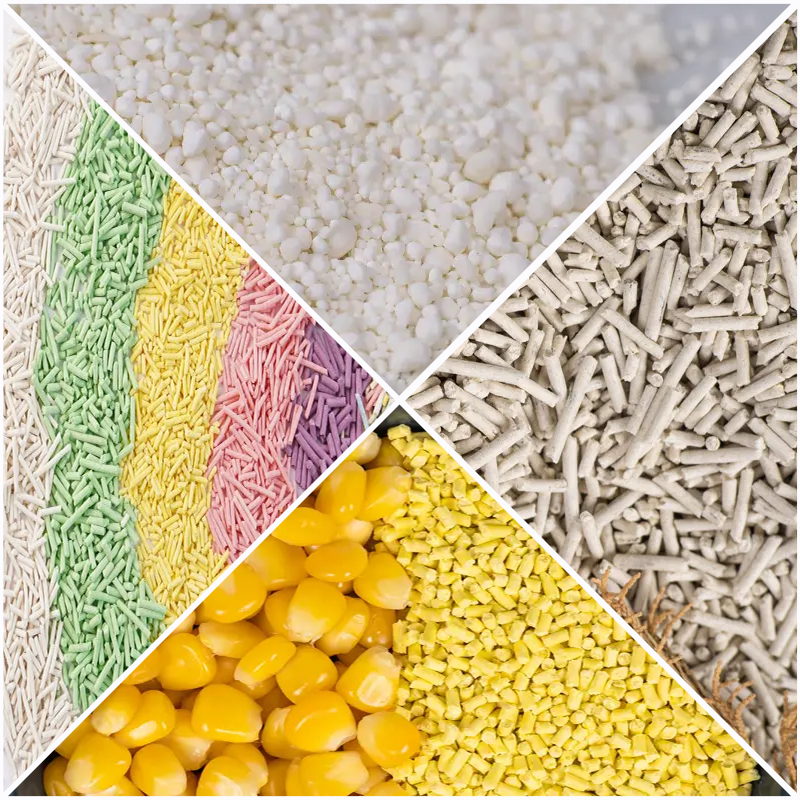
Tofu, corn, cassava, cereal, and other plant-based materials can be used to develop different litter formulas.
However, the raw material alone does not determine the final product quality.
The manufacturing process, formula, granule structure, moisture control, additives, and quality-control system all influence the final result.
For this reason, buyers should evaluate the manufacturer as carefully as they evaluate the product itself.
What to Look for in a Reliable Cat Litter Manufacturer
If you are sourcing cat litter for wholesale, distribution, e-commerce, or a private-label brand, consider asking the manufacturer:
What raw materials are used?
What types of cat litter can you produce?
What is your annual production capacity?
Can you provide samples before bulk production?
Do you offer OEM and ODM services?
Can you customize the formula or granule size?
Can packaging and private labeling be customized?
What quality-control procedures are used?
Can relevant testing reports or certifications be provided?
Can you support large-volume orders consistently?
These questions can help distinguish a genuine manufacturing partner from a supplier that simply resells products.
Why Choose Gelin Town Pet as Your Cat Litter Manufacturing Partner?
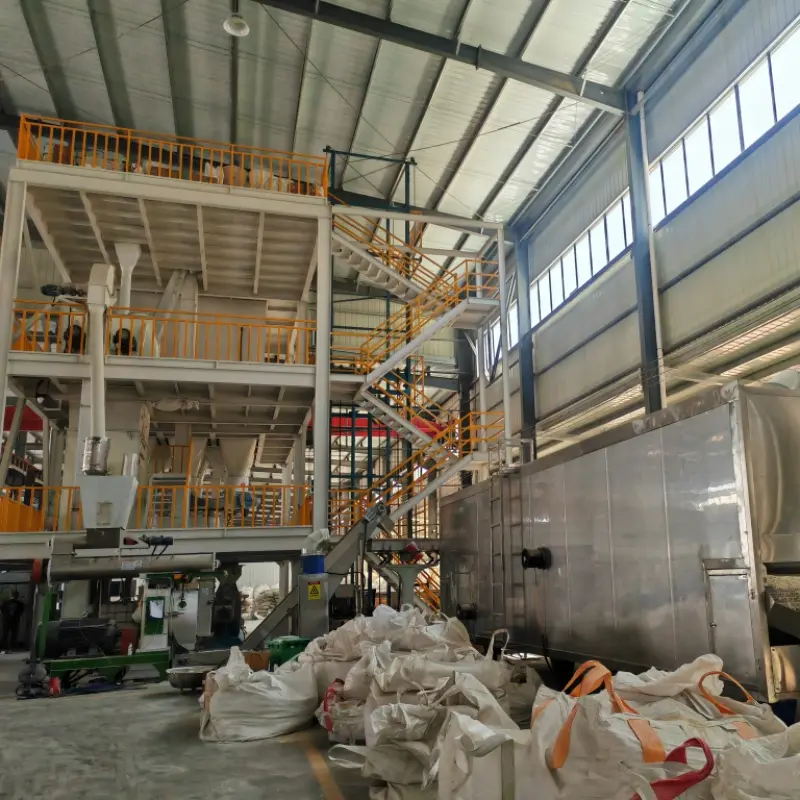
Established in 2020, Shandong Gelin Town Pet Products Co., Ltd. is a professional cat litter manufacturer with its own modern cat litter factory.
Our production and R&D focus is centered on plant-based cat litter. Our factory covers approximately 16,000 square meters and has an annual production capacity of approximately 7,000 tons.
We use automated cat litter production equipment and standardized workshops to support large-volume manufacturing. Our production capabilities allow us to develop and manufacture different types of cat litter according to customer requirements.
Our product range includes:
Plant-based cat litter
Tofu cat litter
Corn cat litter
Health-monitoring cat litter
Natural mineral cat litter
Mixed cat litter
Other customized cat litter solutions
We also provide OEM and ODM cat litter services for pet brands, wholesalers, retailers, and e-commerce businesses.
Depending on project requirements, customization can include materials, formulas, colors, fragrances, granule types, packaging, private labeling, and testing requirements.
Our quality management and business certifications include BSCI, ISO9001, SGS, and CTI.
With experience serving customers in Europe, America, Australia, Asia, and other markets, our goal is to provide a complete cat litter supply solution from raw materials and product development to manufacturing and packaged products.
Whether you are building a new private-label cat litter brand, expanding an existing pet product range, or looking for a reliable tofu cat litter processing factory, our manufacturing capabilities can support both product customization and large-volume orders.
Final Checklist: How to Avoid the Worst Cat Litter
Before choosing a cat litter, use this checklist:
| Question | What to Look For |
|---|---|
| Is there excessive dust? | Minimal visible dust |
| Does it absorb quickly? | Fast and effective absorption |
| Does it clump firmly? | Strong, scoopable clumps |
| Does it control odors? | Effective odor management rather than fragrance alone |
| Does it track excessively? | Reasonable particle size and low tracking |
| Does it break apart easily? | Durable granules |
| Is the texture suitable? | Comfortable, consistent granules |
| Is the material clearly identified? | Transparent product information |
| Does it work for multiple cats? | Stable performance under frequent use |
| Is the manufacturer reliable? | Factory capability, quality control, documentation, and support |
The worst cat litter is not necessarily the cheapest product or a particular type of cat litter. It is a product that fails to meet the practical needs of cats and their owners.
The most reliable way to choose cat litter is to look beyond the package and evaluate the complete product: raw materials, dust, absorption, clumping, odor control, tracking, texture, durability, and manufacturing consistency.
For pet brands and commercial buyers, the manufacturer is equally important. A capable cat litter factory can provide more consistent quality, product development support, OEM/ODM customization, and scalable production.
If you are looking for a tofu cat litter manufacturer, plant-based cat litter supplier, wholesale cat litter factory, or OEM/ODM cat litter partner, Gelin Town Pet can help develop and manufacture cat litter products according to your market and brand requirements. Contact us for high-quality cat litter.

387.webp)


122.webp)